Showing posts with label resources. Show all posts

Monday

"Blue Gold: World Water Wars" & "FLOW"

There is a documentary movie about water issues. It is called Blue Gold: World Water Wars. Here is the movie trailer.


Wars of the future will be fought over water as they are over oil today, as the source of human survival enters the global marketplace and political arena. Corporate giants, private investors, and corrupt governments vie for control of our dwindling supply, prompting protests, lawsuits, and revolutions from citizens fighting for the right to survive. Past civilizations have collapsed from poor water management. Can the human race survive?
Director Sam Bozzo
The movie was released in Japan in January 2010. You can order the DVD, or you could download the movie as a BitTorrent -- with the understanding of the director!

Another 2008 documentary, Flow: For the Love of Water, also discusses the same issues, focusing on the privatization of water. The film was on TV in Japan on November 1, 2009. DVDs are also available.

You can read more about the water crisis and water politics (also known as hydropolitics) in these Wikipedia articles, which give a useful overview.

We don't use water in only the obvious ways. It also takes a lot of water to make food and other things we use. If we consider this "virtual water," then Japan is one of the world's biggest water users, as this map shows. Here are some tips for saving water.

Sunday

Thursday

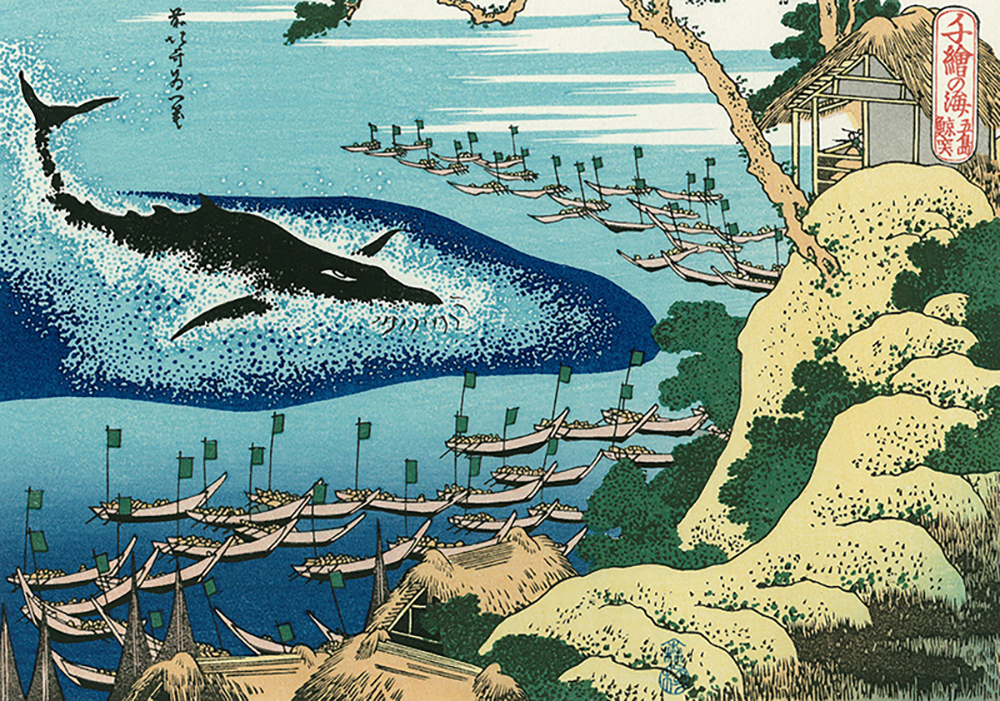
Whales help reduce carbon dioxide

Research by Trish Lavery at Flinders University has shown that by feeding in deep waters and defecating in surface waters, whales cycle iron and other nutrients to where they can be used for photosynthesis, helping absorb carbon dioxide. The research has been published in the Proceedings of the Royal Society and re-published in the popular magazine Scientific American and been the subject of radio and television news reports. Even the Sea Shepherd Conservation Society quickly publicized the news with an editorial praising whale excrement.

In other whale news, the German magazine Spiegel Online has an article on whaling, with an accompanying photo gallery, and TIME magazine has had some commentary on the issue as it is recently in the news. Australia is taking Japan to the World Court and Japan is starting its northern hemisphere whaling season.

Mekong River Commission

Visit the web site of the Mekong River Commission.

Monday

Wars for Water? (Unit 7--The Environment: Currents of Interest)

The article by Michael Klare was originally published in Newsweek.You can find another copy of it here.

Although the Newsweek article is positive about the chances for peace and international cooperation, Professor Klare seems to make the opposite points in some of his video-blogging at Big Think.


Listen to this.


Hey! Look! Joseph Stiglitz is on Big Think, too!

Sunday

From GDP to Gross National Happiness

The current global economic crisis is causing a lot of reconsideration and re-examination of past practices and theories. French President Sarkozy fromed a commission including Nobel-Prize-winners Amartya Sen and Joseph Stiglitz to consider new ways to measure growth. Their report was released September 2009.

www.france24.com

New York Times

Here is a related video from December 11, 2009: the Kenneth Arrow lecture by Amartya Sen, including a response by Joseph Stiglitz. It's very very very long, but it gives you an idea of how Amartya Sen speaks and looks.

Annual Kenneth Arrow Lecture Featuring Amartya Sen, Joseph Stiglitz, and Eric Maskin, Part 1 of 3 from Heyman Center for the Humanities on Vimeo.


Tuesday

A whale of a problem

If we are going to discuss whaling in modern Japan, it's useful to know as much as possible about whales, and other cetaceans. Are they intelligent? Are they highly evolved? Are they endangered?

You can read about some general background information about whaling:
http://en.wikipedia.org/wiki/Whaling

This is the site of Japan's ICR (Institute of Cetacean Research). Controversially, their "research" involves killing and eating whales.
http://www.icrwhale.org/abouticr.htm

Here is the Wikipedia article on the ICR.
http://en.wikipedia.org/wiki/Institute_of_Cetacean_Research

The International Whaling Commission (IWC) has a website that includes current population estimates, sounds, and other information. You could also read about the IWC from the Wikipedia, from the World Wildlife Fund (WWF), and from the Humane Society.

Greenpeace reports on Japanese whaling on their web site, and Greenpeace Japan has a site as well.

Another group, the Sea Shepherd Conservation Society calls themselves the "Whales' Navy" and uses direct action and even violence against whaling ships to try to save whales' lives. They were strongly criticized by NHK and other Japanese media.

Monday

Whaling (Unit 5)


The original source for the whaling article was the New York Times. Find the original unedited, longer article here or here.

Sunday

Unit 2--The Environment: Toward a Greener Future

Unit 2
The Environment: Toward a Greener Future

Here is a simple and a difficult explanation of deforestation.
http://simple.wikipedia.org/wiki/Deforestation
http://en.wikipedia.org/wiki/Deforestation

This theory was mentioned in the reading.
http://en.wikipedia.org/wiki/Forest_transition

A longer reading of which our textbook has an excerpt:
Restoring the Forests
by David G. Victor and Jesse H. Ausubel

http://greatrestoration.rockefeller.edu/

Saturday

Worldmapper

Worldmapper is an interesting site, especially for students, teachers, and people who are interested in the world. They have created about 700 maps which display information in a visual, map form. The sizes of countries are distorted to show various kinds of information in a proportional way. This map shows the number of elderly people in the country.
© Copyright 2006 SASI Group (University of Sheffield) and Mark Newman (University of Michigan).

Other maps show distribution patterns of food, goods, resources, work, income, wealth, health, education, poverty, violence, cause of death, age of death, communication, religion, language, and other measurable qualities. This site also allows you to download high-resolution images, PDFs, Excel or OpenDoc data spreadsheets, and other resources under a Creative Commons license.