Showing posts with label culture. Show all posts

Monday

Aging Gracefully (Unit 9)

The original article, Growing Old, Baby Boomer Style by Tom Valleo can be read online here at WebMD and here at CBS News. It was originally published in 2006. Some things have certainly changed since it was written, such as the predicted worker shortage of 2010.

[Click on the population pyramid on the left to see an animated projection of Japan's past and future population.]

In Japan, Seniors With an Edge was published in 2007 by the NYT. You may need to log in to the NYT to read it online, or read Google's cache of the page.

Read more at Japan's National Institute of Population and Social Security Research. Be sure to see the animated population pyramid for Japan. They have a full report of Japan's population statistics (pdf).

The demographic transition to a stable industrial population is a centuries-long process that is ongoing in much of the world now.

Note that there are about four million births in the United States annually–only slightly below the peak years of the 1946-1964 Baby Boom.

The U.S. Census Bureau has a database of population information about many other countries of the world, too.

What is the population of the world? Over 6.8 billion in 2010!

Thursday

Differences between British and American English

As you are probably aware, Americans and Britons speak the same language, but there are many small yet significant differences between British and American English. One of the most visible differences is spelling, which is often different due to the influences of early American dictionary publishers. A nice list of spelling differences by type is here.

Differences in word usage sometimes requires "translation" or the creation of local versions for British and American software, books, and other materials. Note this list by the Ubuntu (Linux operating system) team.

You may enjoy reading the British English Glossary or this (course) outline of differences. An interesting quote from that outline is:
American and British English are both variants of World English.

Sunday

Thursday

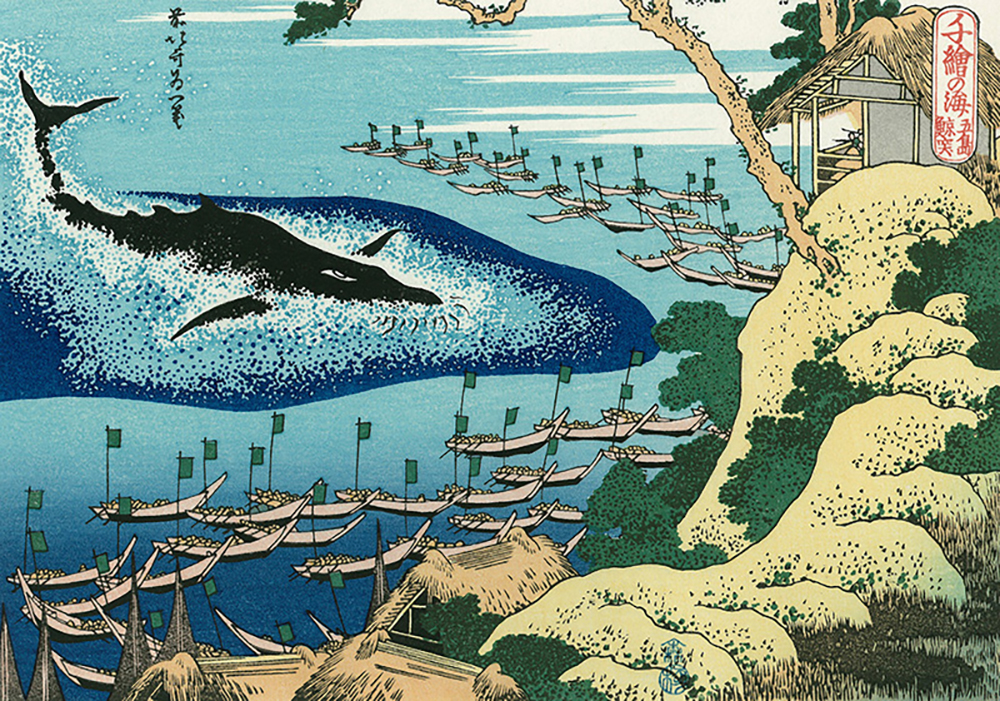
Whales help reduce carbon dioxide

Research by Trish Lavery at Flinders University has shown that by feeding in deep waters and defecating in surface waters, whales cycle iron and other nutrients to where they can be used for photosynthesis, helping absorb carbon dioxide. The research has been published in the Proceedings of the Royal Society and re-published in the popular magazine Scientific American and been the subject of radio and television news reports. Even the Sea Shepherd Conservation Society quickly publicized the news with an editorial praising whale excrement.

In other whale news, the German magazine Spiegel Online has an article on whaling, with an accompanying photo gallery, and TIME magazine has had some commentary on the issue as it is recently in the news. Australia is taking Japan to the World Court and Japan is starting its northern hemisphere whaling season.

Tuesday

A whale of a problem

If we are going to discuss whaling in modern Japan, it's useful to know as much as possible about whales, and other cetaceans. Are they intelligent? Are they highly evolved? Are they endangered?

You can read about some general background information about whaling:
http://en.wikipedia.org/wiki/Whaling

This is the site of Japan's ICR (Institute of Cetacean Research). Controversially, their "research" involves killing and eating whales.
http://www.icrwhale.org/abouticr.htm

Here is the Wikipedia article on the ICR.
http://en.wikipedia.org/wiki/Institute_of_Cetacean_Research

The International Whaling Commission (IWC) has a website that includes current population estimates, sounds, and other information. You could also read about the IWC from the Wikipedia, from the World Wildlife Fund (WWF), and from the Humane Society.

Greenpeace reports on Japanese whaling on their web site, and Greenpeace Japan has a site as well.

Another group, the Sea Shepherd Conservation Society calls themselves the "Whales' Navy" and uses direct action and even violence against whaling ships to try to save whales' lives. They were strongly criticized by NHK and other Japanese media.

Monday

Whaling (Unit 5)


The original source for the whaling article was the New York Times. Find the original unedited, longer article here or here.

Sunday

LNKGYfN (Long-Necked Karen Girls Yearn for Normality)

This news story appeared in the Brunei Times on April 30, 2007, with the byline of "Shino Yuasa". A slightly different version --with no byline-- appeared in the Sawf news on May 1. This version has many pictures of Muko, Amy, Mari, and the village where they live, taken by AFP photographer Pornchai Kittiwongsakul. Both versions are longer than the edited version in our textbook. The story continues…
Amy complains the rings bring her constant, and unwanted, attention.

"When I ventured out to a nearby Thai city with my friends, people pointed their fingers at us, saying 'here come the long necks'," recalls Amy.

"I kept quiet, but was very angry at them. I got hissed at by total strangers only because of my neck rings," she says.

Karen long-necked teenagers Muko(L) and Amy
© AFP/File Pornchai Kittiwongsakul

But Muko and Amy explain that the rings are coiled around their necks so tightly that they cannot remove them on their own.

The younger girls said they were told when the first rings were placed around their necks that they would make them look more beautiful and help them attract good husbands -- not unlike the justification for Chinese footbinding, a crippling practice that endured for 1,000 years until the communist revolution of 1949.

The rings cause the girls constant pain and discomfort, including headaches, stiff shoulders and muscles.

While the rings effectively make the neck look longer, in fact their weight pushes the shoulders and collarbones down by several centimetres. According to tradition the girls are never permitted to remove the rings, which force them to look straight ahead as they cannot move their heads.

To take them off, the girls have to see a specialist who charges 500 baht for the service. After some time, their shoulders and collarbones usually return to normal.

"I am secretly saving money for the ring removal," Amy confides. Muko, sitting next to Amy, says she plans to remove her rings when she finishes middle school next year.

"My mother does not know my plan. It's my secret," Muko says.

For 22-year-old Mari Muri, who wears 16 rings, the pressure to keep the rings died with her mother three years ago.

"My mother used to say neck rings would make me beautiful. But I've never believed in that," says Mari Muri, who sells colourful textiles, postcards and long-necked dolls, and has had the rings since she was five.

"I am supposed to add to my neck rings, but I've stopped doing that since my mother passed away," she said.

She said her 19-year-old sister Mu Ba removed her rings as soon as their mother died and moved to another refugee camp, says Mari Muri, who has no family name, adding that she is ready to take hers off "any time".

For Mayao, the 52-year-old, girls like Muko, Amy and Mari Muri are a disgrace to the Karen tradition.

"More and more girls are removing their rings. They don't appreciate our culture, which has been passed down through generations," says the petite woman, who proudly shows off her 25 brass rings.

"I'm worried our Karen tradition will disappear," says Mayao.

Amy, for different reasons, also expects the tradition to end.

"It's enough for me. I will not put neck rings on my daughter," she says.

More Links:

"Peoples of the World" - a short description of the Karen
http://www.peoplesoftheworld.org/text?people=Karen

Photography of Ban Nai Soi village
http://www.panasia.net/photo/thailand/bannaisoi/

Tourist-oriented website in Northern Thailand introducing the Karen
http://www.chiangmai-chiangrai.com/longneck_karen.html

Picture and Thai tour info
http://www.chiangdao.com/chiangmai/karenlongneck.htm

Friday

More Turban News!

Here is the original New York Times article by Amelia Gentleman which was reprinted in our textbook (Young Sikh Men Get Haircuts, Annoying Their Elders).

At SikhiWiki you can read about the latest "International Turban Day" - in English or Japanese (GoogleTranslate).

If you wondered what Punjabi pop star Pammi Bai looked like, you may have looked up his web site. It has pictures, videos, and music. I will embed his turban-boosting song "Pagg Patiala" here. It seems to be Bhangra -- a rhythmic type of music which is also somewhat popular in London.

Thursday

Unit 4 -- Society and Culture: Old Ways, New Ways

Topics: Newspaper English, Sihk Haircuts, Karen Girls

Here you can read a little background information about turbans. It's actually very long. Also, did you know that the Prime Minister of India, Manmohan Singh, is a member of the Sihk religion?

The Karen of Thailand, Burma, and nearby areas are also known as Kayan. In order to see some pictures of Kayan, please visit Flickr photos from Mae Hong Son, Thailand tagged with Kayan.

The grammar of newspaper headlines is not like ordinary English grammar. You can read more about it here or here.